When travelers search for Amboseli safari dry season wildlife, they usually want one clear answer: which months offer the strongest game viewing? The short answer is June to October, with July and August at the peak. The longer answer matters more. Amboseli’s permanent swamps change how wildlife behaves during dry months. Trade-offs around crowds, dust and rates shape whether the dry season is right for you.
When Is the Amboseli Dry Season?
Amboseli’s main dry season runs from June through October, with the most dependable wildlife viewing usually falling between July and September. January and February form a shorter dry window that can also provide open views, active animals and clear Kilimanjaro mornings. October becomes less predictable as short rains approach.
The core dry season is fairly reliable, but rainfall can shift slightly from year to year. Check seasonal forecasts before booking, and ask your operator for recent conditions. The shorter dry period from late January through February does not draw the same crowds as midsummer. It can deliver open grass and relaxed wildlife. For practical route details, the Amboseli safari guide covers each season.
Why Does Dry-Season Wildlife Viewing Get Easier?
Dry-season viewing improves because grass and other vegetation are shorter, surface water becomes scarce, and wildlife concentrates around Amboseli’s permanent swamps and remaining water sources. These conditions make elephants, zebra, wildebeest, buffalo and predators easier to locate, although animals may gather around fewer areas and vehicles can become concentrated there.
The reason is not that animals appear from nowhere. It is that cover disappears. Short grass makes elephants easier to spot from a distance, and predators have fewer places to hide when hunting. With surface water limited to a few permanent sources, herbivores do the work of gathering for you. The same logic explains why vehicles also gather around those sources, which is why the dry season is not automatically a quiet one.
What Amboseli Safari Dry Season Wildlife Will You See?
Dry-season Amboseli is especially strong for elephants, with regular sightings of zebra, wildebeest, buffalo, giraffe, gazelle, hyena, lion and sometimes cheetah. Birdlife remains important around the swamps. Rhino and leopard should not be promised: they are uncommon in Amboseli, so travelers seeking those species should add a more suitable Kenyan destination.
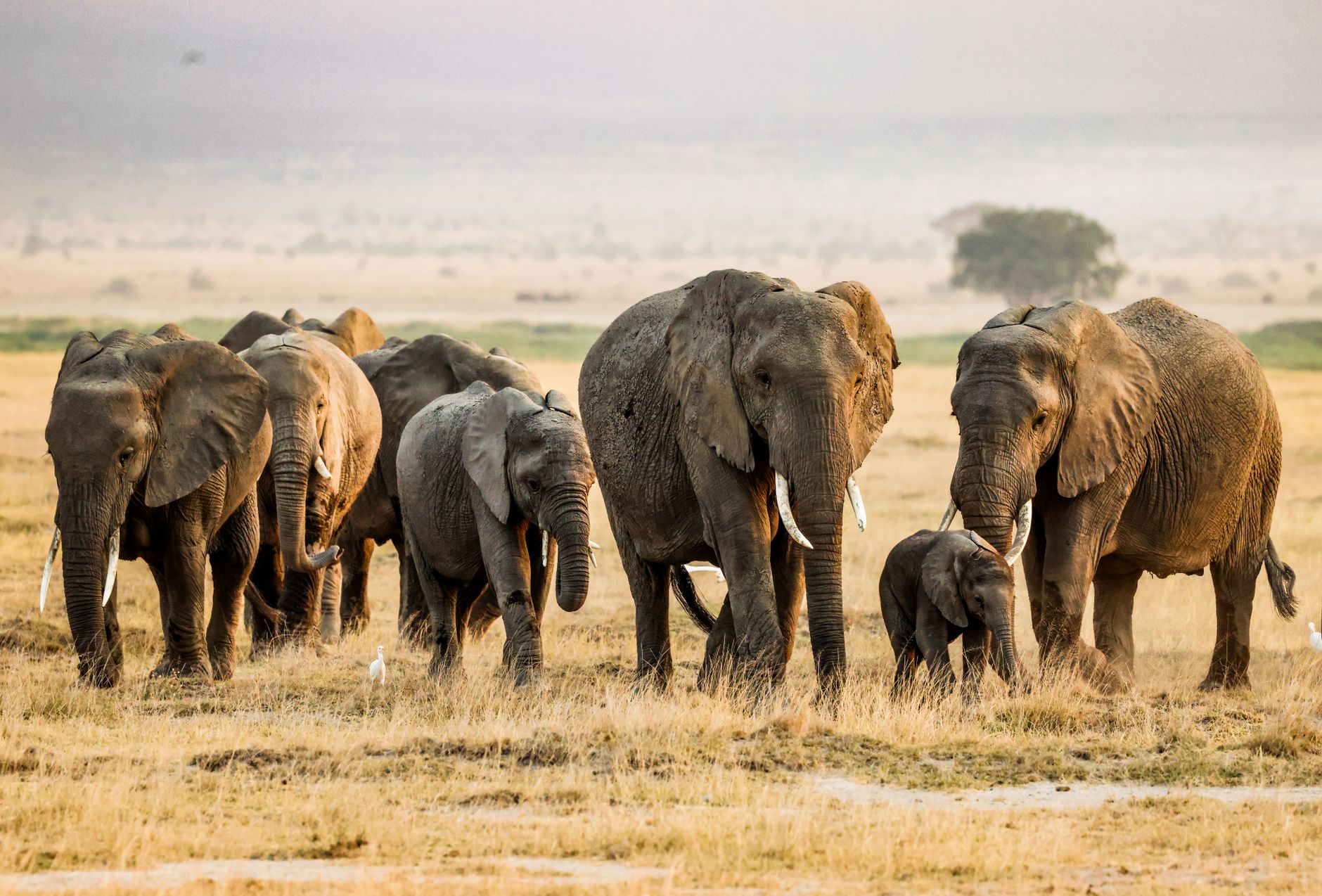
The elephant population is the headline. For many visitors, Amboseli wildlife viewing is really elephant viewing, and for good reason. These are among the most studied elephants in Africa, with researchers following family herds for decades through the Amboseli Elephant Research Project. Expect breeding herds with calves, older bulls with heavy tusks, and plenty of dusty activity around marshes.
Lions are regularly seen, often near the swamps hunting zebra or wildebeest. Cheetah sightings happen but are less predictable. Giraffe, buffalo and a range of antelope round out the list. Birders should keep binoculars ready around the water edges.
If your target list includes the Big Five, understand the gap. Rhino and leopard are uncommon here. Our guide to Kenya’s Big Five parks and where to find them covers better destinations for those species.
Where Does Wildlife Gather in Amboseli?
Wildlife gathers most reliably around Amboseli’s permanent freshwater swamps, especially Enkongo Narok and Longinye, as surrounding plains dry out. Elephant families often move toward marsh edges to feed and bathe, while other herbivores and predators use the same productive areas. Water availability, recent rain and time of day still influence each sighting.
Enkongo Narok and Longinye are the two swamps that matter most. They stay wet because underground water flows to them from Kilimanjaro, which is why they survive the dry season. Elephant families move along the marsh edges feeding on sedges and grass. Buffalo often wallow in the shallows. Lions patrol the same areas because prey concentrations are highest there.
The lake bed that gives Amboseli its open feel can be dusty and dry, but it still provides good sightlines. As the dry season progresses, some animals spread to areas that received isolated showers, so a good guide checks both swamp edges and open plains.
Which Dry-Season Months Are Best for Amboseli Elephants and Photography?
July and August generally offer the strongest combination of concentrated wildlife, dry conditions and clearer Mount Kilimanjaro views. September remains highly reliable for game viewing and can have slightly less pressure than peak midsummer. June may provide comparable wildlife with fewer visitors, while October offers good sightings but increasing cloud and rain risk.
If you want the best combination of elephant behavior and light, plan around July and August. Mornings start clear, and elephants are active before the heat builds. Photographers should still book vehicles with pop-up roofs and flexible departure times; the light fades quickly once dust rises.
The table below compares the main Amboseli dry season months and the shorter dry window.
| Months | Game concentration | Crowd pressure | Kilimanjaro clarity | Notes |
|---|---|---|---|---|
| June | Moderate to high | Low to moderate | Often clear | Good wildlife with fewer vehicles |
| July | High | High | Often clear | Excellent elephant viewing; school holidays raise demand |
| August | Very high | Very high | Best in early morning | Peak month for crowds and rates |
| September | High | Moderate to high | Clear | Strong choice; can feel calmer than August |
| October | Moderate to high | Moderate | Increasing cloud | Good until short rains arrive |
| January to February | Moderate to high | Low | Morning clarity | Quieter short dry season option |
What Are the Dry-Season Trade-Offs?
The dry season brings the easiest wildlife tracking but also peak prices, heavier demand and more vehicles near the swamps. Dust can reduce distant visibility and affect comfort, while the best Kilimanjaro views are usually early in the morning. Booking well ahead and choosing quieter drive times helps offset these disadvantages.
The biggest surprise for first-time visitors is the dust. On a busy day, a line of safari vehicles on the same dirt tracks can leave a fine layer on everything you own. The dust also hangs in the air, softening the very Mount Kilimanjaro views that drew you to Amboseli. Early starts are not optional; the mountain is clearest before the wind picks up.
Demand pushes prices high. Lodges and camps know the demand, and peak-season rates run well above green-season rates. Deciding between a shared vehicle and a private one? Our guide to whether a private safari vehicle is worth the cost helps with that call. For overall budgeting, see our Kenya safari cost breakdown.
Is Amboseli Worth Visiting Outside the Dry Season?
Yes, especially for travelers prioritizing lower prices, greener scenery, newborn animals and migratory birds over the most predictable game viewing. November to May can produce dramatic landscapes and excellent photography, but long rains may make roads difficult and cloud often hides Kilimanjaro. January and February provide a useful quieter, shorter dry-season alternative.
The green season has real advantages for repeat visitors or anyone on a tighter budget. The landscape turns lush, many birds arrive, and newborn animals appear. The catch is that roads can turn sticky after heavy rain, and Kilimanjaro is often hidden behind cloud. If you cannot travel between June and October, late January and February are the easiest alternative because conditions are dry without peak-season demand.
For other regions, timing can differ, so our Kenya safari timing and dry-season planning guide places Amboseli in a national context.
So Which Safari Should You Choose?
Choose July to September if your priority is the most predictable Amboseli safari dry season wildlife viewing, especially elephants and clear Kilimanjaro mornings. Choose June or September for quieter conditions, or January and February for lower prices and open grass. If you need rhino or leopard, add another park instead of expecting them in Amboseli.
Once you know what you want, the best next step is to compare operators that know these conditions. Browse packages through FindMySafari, Valley Safaris, or Trunktrails Safaris to match your dates and budget.
Where Can You Find More Safari Planning Resources?
- Best time to visit Kenya map from SafariPure
- Best time to visit Kenya from Trunktrails Safaris
- Best time to visit Kenya month-by-month map from Valley Safaris
- Amboseli destination guide on FindMySafari